
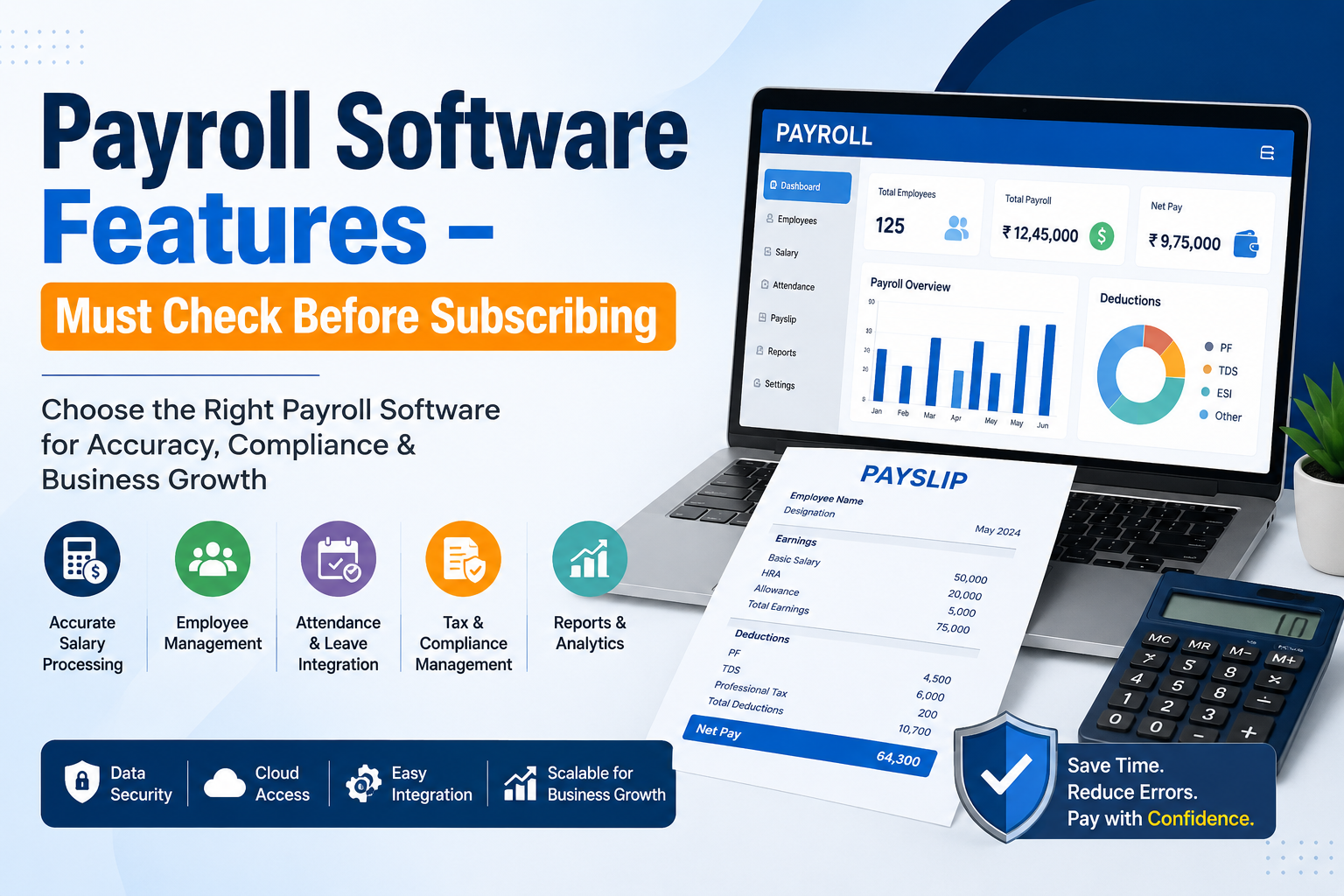
Employee payroll is one of the most critical business operations. According to various HR and workforce studies, payroll errors are among the leading causes of employee dissatisfaction, while manual payroll processing can consume several hours each month for small and medium-sized businesses. As organizations grow, managing salaries, deductions, attendance, tax calculations, and compliance manually becomes increasingly complex.
This is why businesses across industries are adopting payroll software to automate salary processing, reduce administrative burden, and improve accuracy. However, not every payroll solution offers the same capabilities. Before subscribing, it is important to evaluate whether the software provides the features your business needs today and can support your future growth.
Why Payroll Software Has Become Essential
Payroll management involves much more than paying salaries. Businesses must also:
- Calculate earnings and deductions accurately
- Manage attendance and leave records
- Maintain employee data
- Process reimbursements and bonuses
- Generate payslips
- Comply with taxation and labor regulations
- Maintain payroll records for audits and reporting
A small payroll mistake can lead to compliance issues, employee disputes, and financial inaccuracies. Payroll software helps automate these processes and significantly reduces the risk of human error.
1. Automated Salary Calculation
The primary purpose of payroll software is to automate salary processing.
An effective payroll system should automatically calculate:
- Basic pay
- House Rent Allowance (HRA)
- Overtime wages
- Incentives and bonuses
- Reimbursements
- Provident Fund (PF) contributions
- Professional Tax
- Income Tax deductions
- Net salary
Automation minimizes manual calculations and ensures consistency across payroll cycles.
Why It Matters
Manual payroll calculations become increasingly difficult as employee count grows. Automation improves efficiency and reduces processing time.
2. Employee Information Management
Payroll software should act as a centralized employee database.
The system should securely store:
- Employee profiles
- Contact details
- Designations
- Salary structures
- Department information
- Joining dates
- Bank account details
Having all employee records in one place improves payroll accuracy and reduces administrative effort.
3. Attendance and Leave Integration
Payroll and attendance management are closely connected.
Modern payroll software should integrate with:
- Biometric attendance systems
- Leave management modules
- Shift management systems
- Work-hour tracking tools
This ensures salaries are automatically adjusted based on attendance records, overtime hours, paid leave, and unpaid leave.
Example
If an employee takes three unpaid leave days during a month, the payroll software should automatically reflect the deduction without requiring manual calculations.
Statutory Compliance Support
One of the most important factors when selecting payroll software is compliance management.
Businesses in India often need support for:
- Provident Fund (PF)
- Employee State Insurance (ESI)
- Tax Deducted at Source (TDS)
- Professional Tax
- Labor law reporting requirements
Compliance regulations change periodically. Payroll software that automatically updates calculations and reports helps businesses avoid penalties and filing errors.
Payslip Generation
Employees expect transparent salary records.
Payroll software should automatically generate professional payslips containing:
- Gross salary
- Deductions
- Tax information
- Employer contributions
- Net salary payable
Digital payslips improve accessibility while reducing paperwork.
Direct Salary Transfer Capabilities
A good payroll solution should support direct bank transfers or generate bank-compliant salary files.
Benefits include:
- Faster salary processing
- Reduced payment errors
- Improved payroll security
- Better employee satisfaction
This feature becomes especially important for businesses with large workforces.
Employee Self-Service Portal
Many modern payroll platforms provide self-service access for employees.
Employees can:
- Download payslips
- View salary history
- Access tax documents
- Check leave balances
- Update personal information
This reduces routine HR queries and improves operational efficiency.
Reporting and Analytics
Payroll software should provide actionable insights through reports.
Useful reports include:
- Monthly payroll summaries
- Department-wise salary expenses
- Tax deduction reports
- Attendance reports
- Employee cost analysis
These reports help management understand workforce expenses and support financial planning.
Fact
Payroll expenses often represent one of the largest operating costs for service-based businesses, making payroll reporting essential for budgeting and forecasting.
Data Security Features
Payroll systems handle highly sensitive information.
Look for features such as:
- Role-based access control
- Data encryption
- Secure cloud storage
- Automatic backups
- Multi-factor authentication
Strong security measures help protect employee and company data from unauthorized access.
Scalability for Future Growth
Many businesses choose software based on current requirements and later face limitations.
Before subscribing, verify that the system can support:
- Additional employees
- Multiple branches
- Multiple departments
- Expanding payroll structures
- Business growth
Scalable software reduces future migration costs.
Cloud-Based Accessibility
Cloud payroll solutions allow authorized users to access information from anywhere.
Benefits include:
- Remote access
- Real-time updates
- Automatic backups
- Reduced IT infrastructure requirements
- Improved collaboration
Cloud-based solutions are particularly valuable for organizations with distributed teams and multiple locations.
Integration with Accounting and Business Software
Payroll should not operate in isolation.
The best payroll software integrates with:
- Accounting software
- Billing systems
- Inventory management tools
- Expense management platforms
- Financial reporting systems
Integration eliminates duplicate data entry and improves financial accuracy.
The Importance of Unified Business Management
Many growing businesses prefer software that connects payroll with accounting and billing functions.
VyapaarKHATA helps businesses streamline several core operations through a single platform, including:
- GST and Non-GST invoice creation
- Billing management
- Customer management
- WhatsApp and Email invoice sharing
- Inventory management
- Purchase management
- Expense tracking
- Accounting and financial record management
By centralizing business operations, organizations can reduce administrative workload and maintain better financial visibility.
Questions to Ask Before Subscribing
Before selecting payroll software, consider the following:
- Does it automate salary calculations?
- Does it support Indian tax and statutory compliance?
- Can it integrate with attendance systems?
- Are payroll reports customizable?
- Is employee data protected through advanced security measures?
- Can the software scale with business growth?
- Does it integrate with accounting and billing software?
The answers to these questions can help determine whether the solution will deliver long-term value.
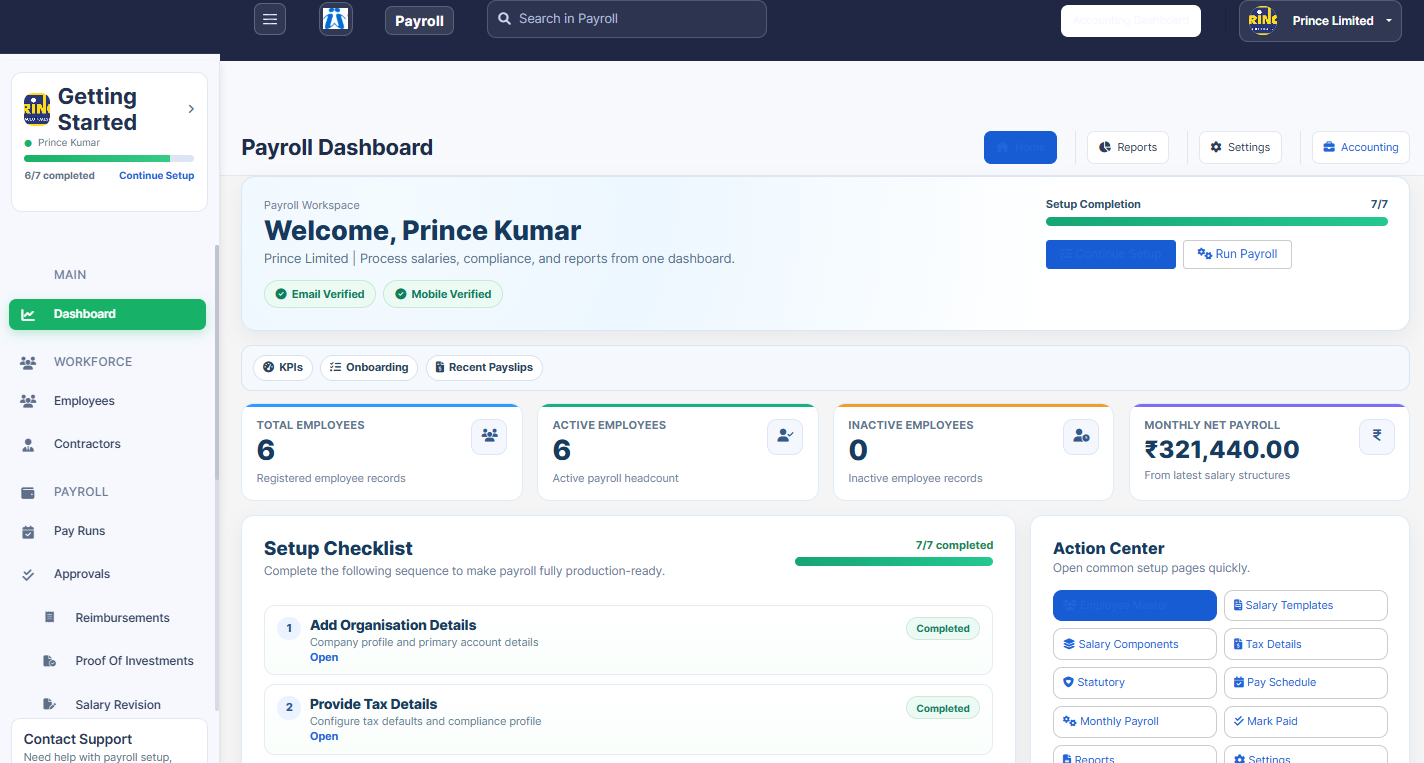
Payroll software is no longer a luxury—it is an essential business tool. The right solution can improve payroll accuracy, save administrative time, simplify compliance management, and enhance employee satisfaction.
Before subscribing, businesses should carefully evaluate automation capabilities, compliance features, attendance integration, reporting tools, security standards, and scalability. Selecting software that works alongside broader business management solutions such as VyapaarKHATA can further improve efficiency by connecting invoicing, accounting, inventory management, and financial operations within a single ecosystem.
A well-informed decision today can help businesses avoid costly payroll errors and build a stronger foundation for future growth.