

A Comprehensive & Detailed Guide for MSMEs and SMEs
Managing cash flow is one of the biggest challenges for Indian businesses, especially MSMEs and SMEs that operate on long credit cycles. While sales may be strong, delayed payments from customers (30–90+ days) can create working capital pressure. This is where invoice financing (factoring) becomes a practical financial solution.
However, before choosing this option, one key question arises:
How much does invoice financing cost in India?
This detailed guide explains every common factoring charge, how pricing works, real cost calculations, influencing factors, hidden fees, and how businesses can reduce costs.
What Is Invoice Financing (Factoring)?
Invoice financing is a short-term working capital solution where businesses sell their unpaid invoices to a factoring company (called a “factor”) at a discount in exchange for immediate cash.
Instead of waiting for customers to pay in 60–90 days, you receive up to 80%–95% of the invoice value within 24–48 hours. The remaining balance (after deducting fees) is paid once your customer clears the invoice.
It is especially useful for:
- Manufacturing businesses
- Traders & wholesalers
- Service providers
- Government contractors
- Exporters
Main Components of Factoring Charges in India
Invoice financing costs are not limited to just one “interest rate.” Multiple components together determine the total expense.
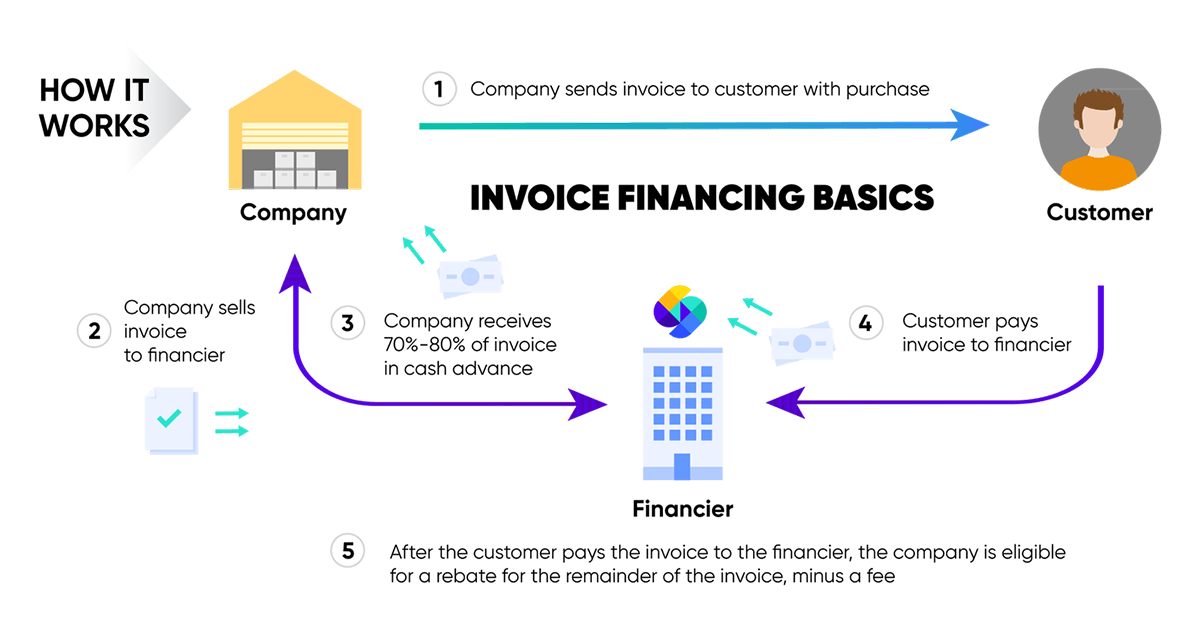
Let’s break them down in detail.
Discounting Fee (Primary Factoring Charge)
This is the main cost of invoice financing.
It is calculated as a percentage of the invoice value for the duration the invoice remains unpaid.
Typical Range in India:
- 1% to 2.5% per month
- In some cases, may go up to 3% depending on risk profile
How It Works:
If:
- Invoice Value = Rs 10,00,000
- Discount Rate = 1.5% per month
- Credit Period = 60 days
Then:
Rs 10,00,000 × 1.5% × 2 months = Rs 30,000
This Rs 30,000 is the primary cost of financing.
Processing / Onboarding Fee
Most factoring companies charge a one-time processing fee.
Typical Range:
- 0.25% to 1% of invoice value
OR - Flat ?500 to ?5,000 per invoice
This covers:
- Documentation
- Risk evaluation
- Customer verification
- Account setup
Some fintech platforms waive this for regular users.
Service / Administration Charges
Some providers charge a service fee for:
- Managing invoice records
- Payment tracking
- Collections
- Account handling
Typical Cost:
- 0.2% to 0.5% annually
OR - Included in discount fee (depends on provider)
Always check if this is included or charged separately.
Late Payment / Overdue Charges
If your customer delays payment beyond agreed credit terms:
- Extra 1%–2% per month may apply
- In recourse factoring, the business may need to repay the advance
This increases total financing cost significantly.
Recourse vs Non-Recourse Charges
Recourse Factoring
- Lower cost
- You bear risk if customer does not pay
Non-Recourse Factoring
- Higher cost
- Factor bears default risk
Non-recourse factoring typically costs 0.5%–1% more per month.
Additional / Hidden Charges
Some agreements may include:
- Early termination fees
- Minimum monthly usage charges
- Legal/documentation charges
- Fund transfer fees
- GST on service charges
Always read terms carefully before signing.
Complete Cost Calculation Example
Let’s understand full cost structure clearly.
Scenario:
- Invoice Value: Rs 15,00,000
- Advance Rate: 90%
- Discount Rate: 2% per month
- Tenure: 45 days
- Processing Fee: 0.5%
Step 1: Advance Received
Rs 15,00,000 × 90% = Rs 13,50,000
Step 2: Discount Fee
Rs 15,00,000 × 2% × 1.5 months = Rs 45,000
Step 3: Processing Fee
Rs 15,00,000 × 0.5% = Rs 7,500
Total Cost:
Rs 45,000 + Rs 7,500 = Rs 52,500
Effective Cost:
Rs 52,500 ÷ Rs 15,00,000 = 3.5% approximately
What Affects Invoice Financing Cost?
Several factors influence pricing.
Customer Credit Quality
Invoices raised on reputed companies attract lower rates.
Invoice Volume
Higher volume = better negotiation power.
Industry Type
Stable industries (FMCG, manufacturing) get better pricing than volatile sectors.
Payment Tenure
30-day invoices cost less than 90-day invoices.
Business Financial Health
GST compliance, ITR filings, and bank records impact approval rates.
Is Invoice Financing Expensive?
It depends on comparison.
Compared To:
- Bank OD / CC → Usually cheaper
- Unsecured Business Loan → Often comparable
- Credit Card borrowing → Factoring is cheaper
- Missed business opportunities → Factoring can be cost-effective
The real value lies in improved liquidity and uninterrupted operations.
Role of Digital Invoicing in Reducing Factoring Cost
Factoring companies prefer businesses with:
- Organized invoice records
- Proper GST compliance
- Accurate customer data
- Transparent accounting
This is where digital invoicing solutions become important.
Why VyapaarKHATA Is Helpful for MSMEs
VyapaarKHATA is a simple and powerful solution for managing Invoice, Billing and Accounting.
It helps businesses to:
- Create GST & Non-GST Invoices and Bills
- Send invoices via Email and WhatsApp
- Manage customer contacts
- Track Inventory
- Handle Purchase Management
- Record Expenses
- Maintain accounting records digitally
VyapaarKHATA is dedicated to serving India’s thriving MSME and SME sector, which includes over 63 million businesses.
It offers:
- Website platform
- Android App
- Digital transaction documentation
- Easy invoice creation
- Faster GST billing
- Reduced manual errors
- Time-saving automation
Its aim is to become the best and most affordable invoicing software for Indian SMEs, simplifying business management through practical and user-friendly tools.
By using VyapaarKHATA:
- You maintain structured invoice records
- Improve credibility with financiers
- Reduce document verification time
- Increase chances of lower factoring rates
To access VyapaarKHATA, go to My Account or Create Account Free and start managing invoices digitally.
Tips to Reduce Factoring Charges
Here are expert strategies to lower costs:
Choose shorter credit cycles
Factor invoices of reputed customers
Negotiate rates for bulk invoices
Maintain GST compliance
Avoid late payments
Compare multiple providers
Use structured invoicing software
Quick Summary Table of Common Factoring Charges in India
| Charge Type | Typical Range |
|---|---|
| Discount Rate | 1% – 2.5% per month |
| Processing Fee | 0.25% – 1% |
| Admin Fee | 0.2% – 0.5% annually |
| Late Fee | 1% – 2% per month |
| Non-Recourse Premium | +0.5% – 1% |
Final Conclusion
Invoice financing is a powerful working capital tool for Indian MSMEs and SMEs. While costs typically range between 1% to 2.5% per month, total charges depend on credit risk, tenure, invoice volume, and agreement terms.
Understanding every cost component — discount fees, processing charges, admin fees, and overdue penalties — helps businesses make informed financial decisions.
When combined with structured invoicing and digital record-keeping using tools like VyapaarKHATA, businesses can improve transparency, reduce approval delays, and potentially negotiate better financing terms.